
It’s so funny to think that my children will have no idea what a walkman is, or a slinky, or any number of objects that were popular decades ago, but are completely obsolete nowadays. The object we’re going to talk about today definitely fits into this category, and it’s something that you may remember yourself, from many years ago.
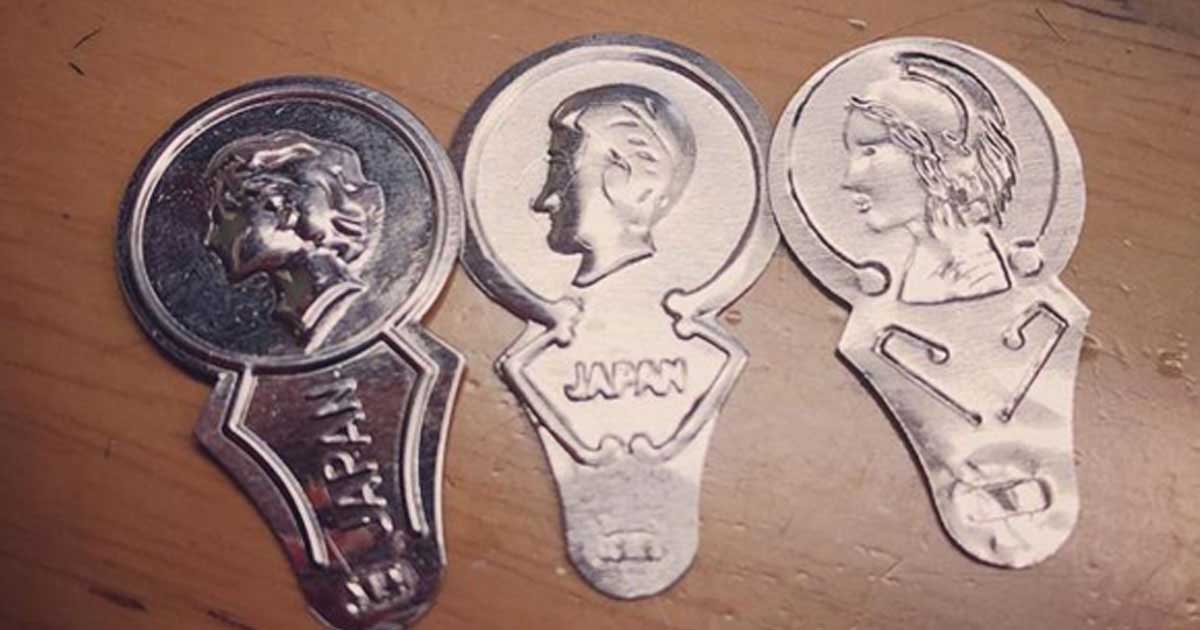
A small set of metal sewing tools has unexpectedly captured big attention online this week after a photo circulated showing three coin-shaped needle threaders featuring raised human profiles. At first glance, the objects resemble commemorative coins. A closer look reveals something more practical—and more intriguing.
The items are needle threaders, simple tools designed to help pass thread through the eye of a needle. What makes these examples unusual is their design. Each is stamped from silvery metal and molded with a classical side-profile portrait, giving them the look of miniature medals rather than everyday sewing aids. One clearly bears the word “JAPAN,” suggesting post-war mass production for export.
Functional Tools with Decorative Flair
Needle threaders have existed for centuries, but during the mid-20th century manufacturers began producing them in decorative forms to stand out in crowded sewing markets. These coin-style threaders likely date from that era, when household sewing was common and accessories were often given ornamental touches.
The flat “handle” portion would be held between the fingers, while a thin wire loop—now missing or hard to see in the photo—would pass through the needle’s eye to pull the thread through. Despite their artistic appearance, the tools were intended for daily use.
Why the Faces Matter
What has sparked debate and fascination is the choice to feature realistic human profiles. Viewers online have speculated about whether the designs were inspired by historical figures, idealized portraits, or generic classical imagery. Because the faces are stylized and unlabeled, their exact inspiration remains unclear.
Collectors note that using profile portraits was a common design language at the time, borrowing from coins and medallions to evoke quality, familiarity, and trust—useful marketing traits for household goods.
A Growing Collector’s Niche
Today, these threaders are no longer valued for their utility alone. Vintage sewing accessories have become a niche collecting category, with unusual designs fetching higher prices than standard tools. Coin-style threaders in good condition are especially sought after due to their blend of craftsmanship, nostalgia, and visual oddity.
“These are the kinds of objects people threw in sewing boxes and forgot about,” said one vintage-tool enthusiast on a popular forum. “Now they feel like tiny pieces of social history.”
Small Objects, Big Stories
The renewed interest highlights how ordinary household items can become cultural artifacts over time. What was once a cheap, functional sewing aid is now a conversation starter—raising questions about design trends, manufacturing history, and how even the most mundane tools can reflect the aesthetics of their era.
In an age of disposable plastic accessories, these solid metal threaders stand as a reminder that everyday objects once carried a surprising amount of artistry—and that history sometimes hides in the smallest places.
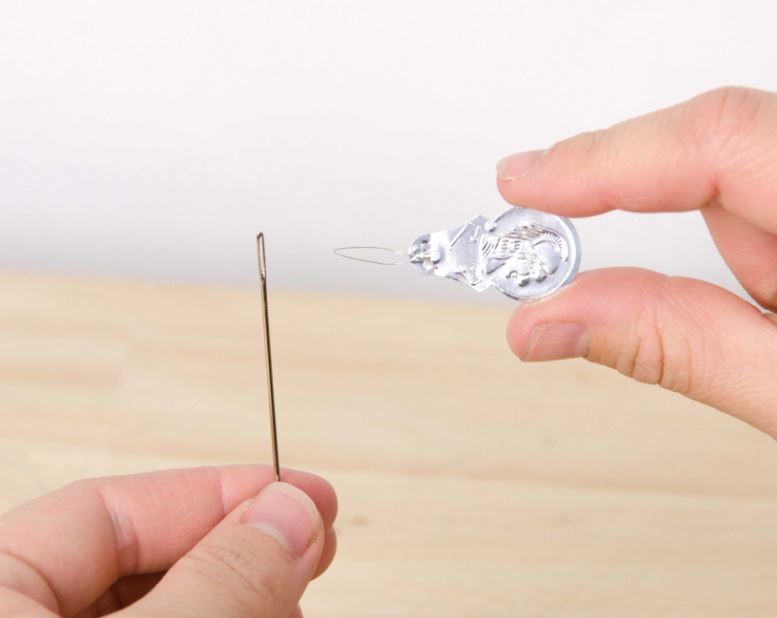
Curiously enough, this type of needle threader dates all the way back to the Victorian era. These needle threaders were inexpensive to make, easy to use, and paid homage to the Queen as an extra bonus. Throughout the early 1900s, different types of needle threaders began to emerge. In 1978, Juki became the first company to incorporate an automatic needle threader into a sewing machine.
You can still find these vintage needle threaders if you search hard enough, and they’re still totally effective today. Although modern needle threaders also exist, there’s something pretty special about using a sewing tool that your grandmother and your grandmother’s grandmother may have used!
The funny-looking tool in the above photo is actually an important sewing tool — it’s a needle threader. These small tools usually consisted of a round metal piece to which a diamond-shaped wire was attached. Many of these needle threaders were made from a thin type of metal, such as tin, and had a stamp on the top piece of the Queen’s head.