
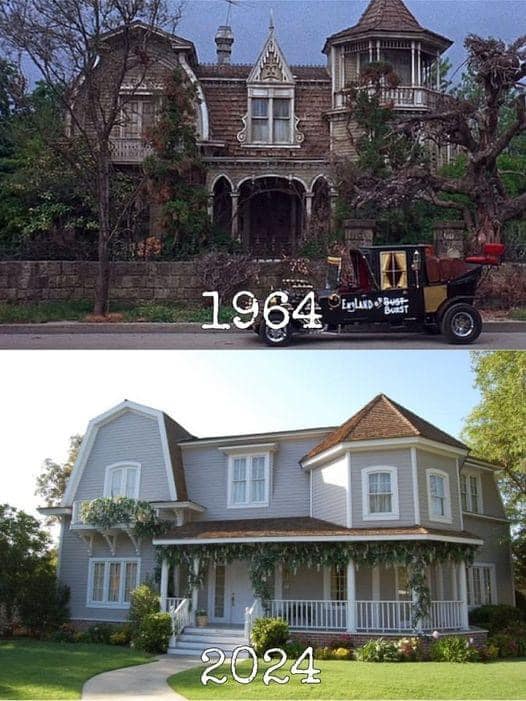
Once shrouded in shadows and silence, a Victorian-era home that stood frozen in time has been dramatically brought back to life, according to striking photographs taken 60 years apart.
The 1964 image captures the house at its lowest point. Darkened wood, skeletal trees, and an air of abandonment give the structure a ghostly presence, as though it were slowly being reclaimed by time itself. The home appeared forgotten—another casualty of neglect, changing eras, and fading craftsmanship.
Fast forward to 2024, and the transformation is nothing short of breathtaking. Bathed in daylight and surrounded by vibrant greenery, the same house now radiates warmth and renewal. Fresh paint, restored woodwork, and carefully preserved architectural details reveal the elegance that had been buried beneath decades of decay. What once looked haunted now feels alive—inviting, proud, and timeless.
Preservationists say the restoration is more than cosmetic. It represents a triumph over loss, a refusal to let history crumble. “This house didn’t just survive,” one expert remarked. “It was rescued.”
The dramatic before-and-after images have struck a chord online, reminding viewers that even the most forgotten places can be reborn—and that history, when cared for, can shine brighter than ever.
A striking pair of photographs circulating online is capturing attention for showing the dramatic transformation of a historic Victorian-style home over six decades.
The first image, dated 1964, presents the house in a dark, weathered state. Surrounded by bare trees and heavy shadows, the structure appears neglected, with aging woodwork and an ominous presence typical of mid-20th-century urban decline. The photograph reflects a time when many historic homes across the country were falling into disrepair due to changing neighborhoods and economic challenges.
In contrast, the second image from 2024 reveals a stunning rebirth. The same house now stands bright and welcoming, painted in soft gray tones with white trim, lush greenery, and a well-maintained wraparound porch. Architectural details once hidden by decay—ornate gables, a turret, and decorative railings—have been carefully restored, honoring the home’s original design while adapting it for modern living.
Preservation experts say the transformation highlights the growing movement to restore historic homes rather than replace them. “This is a perfect example of how thoughtful renovation can protect architectural heritage while revitalizing communities,” one local historian noted.
The side-by-side images serve as a powerful reminder that buildings, like neighborhoods, can be given a second life—turning symbols of neglect into sources of pride.