
The moment I stepped through the front door of this mansion, I felt a strange calm settle over the place—as if it had been waiting quietly for someone to return. The rooms were empty, stripped of furniture and personal belongings, yet the silence felt heavy, like the walls still remembered the people who once lived here. The wooden floors creaked under my steps, a reminder of age and neglect, and faint sunlight slipped through dusty windows, illuminating floating particles in the air. After asking around, I learned the mansion belonged to the Hartwell family, who bought it with hopes of turning it into a peaceful retreat away from city life. But what started as a dream quickly became a burden. Repairs were never-ending, property taxes kept rising, and when they faced a sudden financial setback, the mansion became impossible to maintain. With no choice left, they locked the doors and walked away.
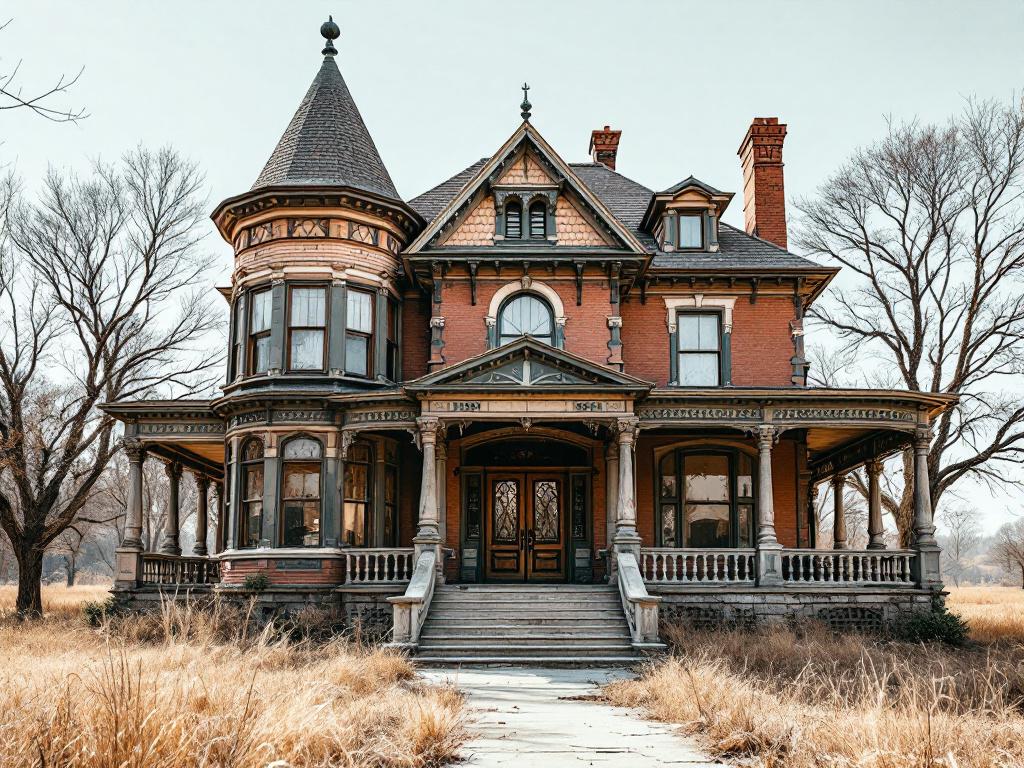
Inside an Abandoned Victorian house Lost to Time.
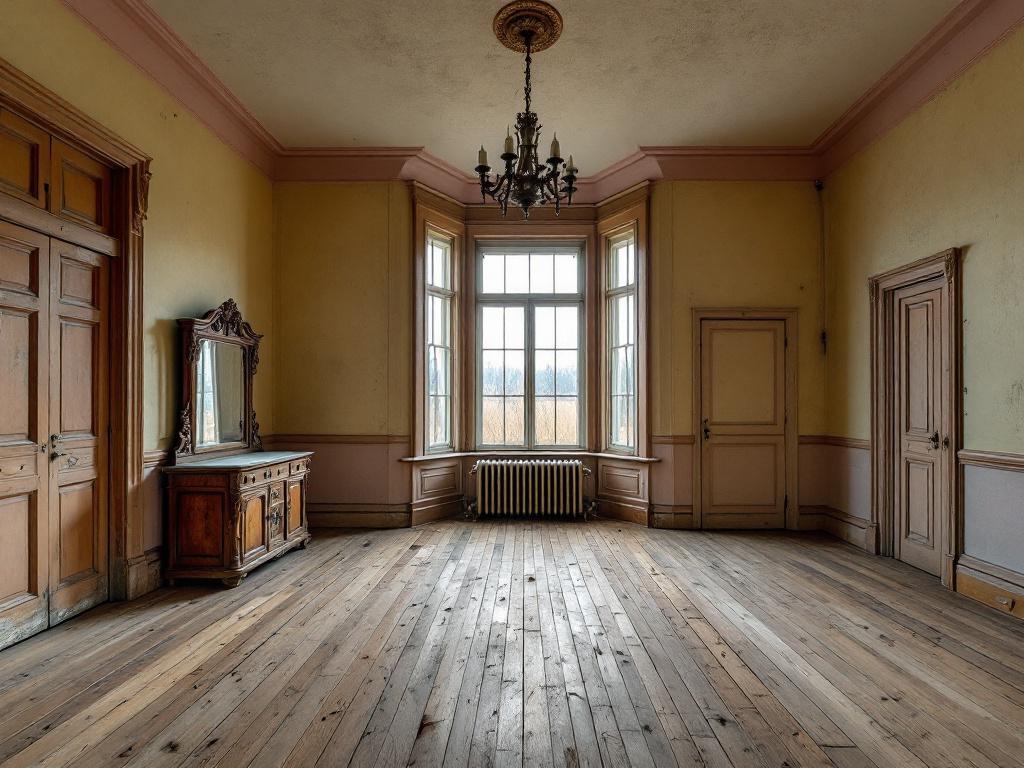
As I explored deeper—empty hallways, bare rooms, a staircase that groaned with every step—it became clear why the house was never reclaimed. Restoring a structure this old would cost more than most people earn in years, and developers never touched it because the land value couldn’t justify the renovation. So the mansion stayed exactly as it was the day the Hartwells left: quiet, aging, yet oddly dignified. Standing in the center of its empty main hall, I felt the weight of a place that wasn’t abandoned suddenly—it was abandoned slowly, over years of struggle, until no one had the strength to return.
If you discovered a silent, empty mansion like this… would you try to bring it back to life, or let it remain a memory of what once was?
The House That Refused to Be Forgotten
At the edge of a field gone feral with tall, winter-bleached grass stands a Victorian house that seems to be holding its breath. Its brick façade, once proud and meticulously kept, now watches the horizon with darkened windows and a wary stillness. Time has not erased this house—it has only loosened its grip.
From the outside, the architecture still tells its story clearly. A turret rises on one corner like a sentry, its conical roof intact, though weathered. Ornate trim clings to the eaves, delicate and determined, refusing to crumble completely. The wraparound porch sags just slightly, as if tired rather than broken, its columns still doing their duty long after anyone stopped thanking them.
This was no modest home. Built in the late 19th century, likely for a prosperous family—perhaps a merchant, a doctor, or a local industrialist—it was designed to impress. Victorian homes were statements of success and permanence, and this one spoke fluently: tall windows, decorative shingles, symmetry softened by flourishes. It was meant to be seen, admired, remembered.
Inside the Quiet
Step through the front door and the air changes.
The interior is wrapped in warm wood paneling, darkened by age but still rich with craftsmanship. Each wall seems to glow softly where sunlight slips through tall windows, tracing long rectangles across the wooden floor. Dust drifts lazily in the light, the only movement in an otherwise frozen space.
The room is nearly empty now. A chair sits alone, angled slightly as if someone stood up and never returned. A narrow bench rests beneath a window dressed in tattered curtains, their fabric faded but still clinging to the glass. Overhead, an ornate chandelier hangs in perfect patience, waiting for a night that will never come.
There are no personal belongings left behind—no photographs, no letters, no forgotten shoes by the door. Whatever departure happened here was deliberate. This was not a house abandoned in a hurry, but one closed carefully, like a book someone meant to return to.
A Life Once Lived
It’s easy to imagine the life that once filled these rooms. Morning light spilling across polished floors. The murmur of conversation drifting down hallways. Heavy coats hung near the door after snowy evenings. Laughter during holidays, hushed voices during illness, footsteps pacing during sleepless nights.
Victorian homes were not just dwellings; they were stages for daily ritual. Parlors for receiving guests, dining rooms for ceremony, bedrooms tucked away like secrets. Every room had a purpose, and every purpose reinforced the rhythms of family life.
So what happened?
No one knows for certain. Perhaps the family moved away as fortunes shifted or industries dried up. Perhaps inheritance disputes left the house in limbo. Perhaps modernization made the cost of upkeep unbearable, and the house was simply… left behind. Whatever the reason, the silence arrived slowly, room by room.
Nature Reclaims What It Was Loaned
Outside, nature has begun its quiet reclamation. Grass presses against the stone path. Bare trees frame the house like witnesses, their branches creaking in the wind. The land no longer feels curated—it feels honest.
And yet, the house resists decay more than expected. The roof still holds. The walls remain upright. The doors still open. It stands not as a ruin, but as a reminder: abandonment does not always mean collapse. Sometimes it just means waiting.
A Monument to Time
There’s something profoundly human about an abandoned Victorian house. It reminds us how much effort we pour into permanence—and how gently time accepts our surrender. This house doesn’t feel angry or tragic. It feels patient. Observant. As though it understands that everything leaves eventually, but not everything is forgotten.
It remains, quietly dignified, holding the shape of lives once lived within it. A monument not to loss, but to endurance.
And if you listen closely, standing in that silent wooden room with the light stretching across the floor, you might feel it too—the sense that the house is not empty at all.
It is simply remembering.